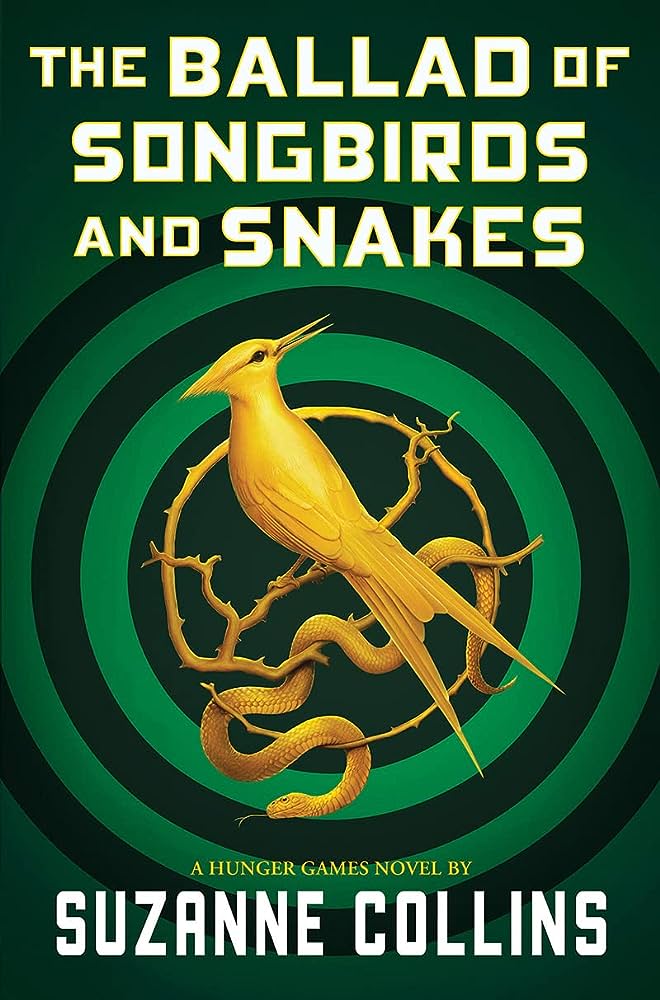
A prequel to Suzanne Collins best-selling trilogy, The Ballad of Songbirds and Snakes follows a young Coriolanus Snow, known as the main antagonist throughout the original series. He is tasked with mentoring the young Lucy Gray Baird, a girl from District 12 reaped to represent the area during the 10th annual Hunger Games; the story follows Snow’s progression from young and impressionable Capitol student to the vicious president most are familiar with, showcasing just how much he has changed throughout his life.
Coming into this book, most people already know the fate of Coriolanus Snow, taken down by the rebellion that began across Panem after the 3rd Quarter Quell. However, readers of this work get a different view into one of the best villains (in my opinion) modern literature has ever encountered. Snow is just 18 years old in this work, set 64 years before the original, trying to win a scholarship so that he can attend the University in the Capitol, but his family has struggled in post-war Panem. This struggle leads Coriolanus to make some questionable decisions, mostly centered around the idea of betrayal, rebellion, and what it means to be truly free.
Suzanne Collins and the Hunger Games trilogy is the first book I remember reading on my own in elementary school, and the emotions I felt while working my way through the story of young Snow mirrors the joy that I experienced as a kid. Suzanne Collins is a mastermind, and the way that she was able to make Snow relatable yet evil is a stroker of literary genius. The novel was filled with her coveted descriptive writing that captivates so many, myself included, and launches you into a world unlike any you have seen before.
The book is split into three parts, told from Snow’s point of view, as a way for readers to understand the way in which he perceives the world around him. Each of these parts showcases a different role that Snow takes upon himself, from bright Capitol student to peacekeeper, and ultimately, a student of Head Gamemaker Dr. Gaul. The book itself moves quite fast, as the 500+ page adventure only occurs over the course of a few months in real time, but it’s definitely a page turner that will leave you wanting to know what happens next.
Collins takes readers on a journey of morals, testing whether or not Snow has the emotional maturity to make the right decisions. Unfortunately for those around him, he often chooses to be evil in the name of furthering his own standing within society, but most can understand how this comes about given his actions as president throughout the original trilogy. These choices showcase the idea that everything Snow does is calculated, measured up to consequences versus the ability to help him gain the favor of those in charge of him. He is a truly nasty being, and the fact that we never see beyond his point of view reinforces the idea that his inner monologue is who he truly is, at his core.
Overall, this work is a five star literary masterpiece, and the film is quite good as well. Collins builds upon a world ravaged by war to tell a story about a boy who grew to be the most powerful person in a nation, while making references to history along the way. There’s not much to complain about with this work (although reading it before the original trilogy would’ve been a wild ride), and I’m so glad Collins decided to continue the story beyond Katniss’ experience.
 An Avid Reader's Guide to Books
Leave a comment