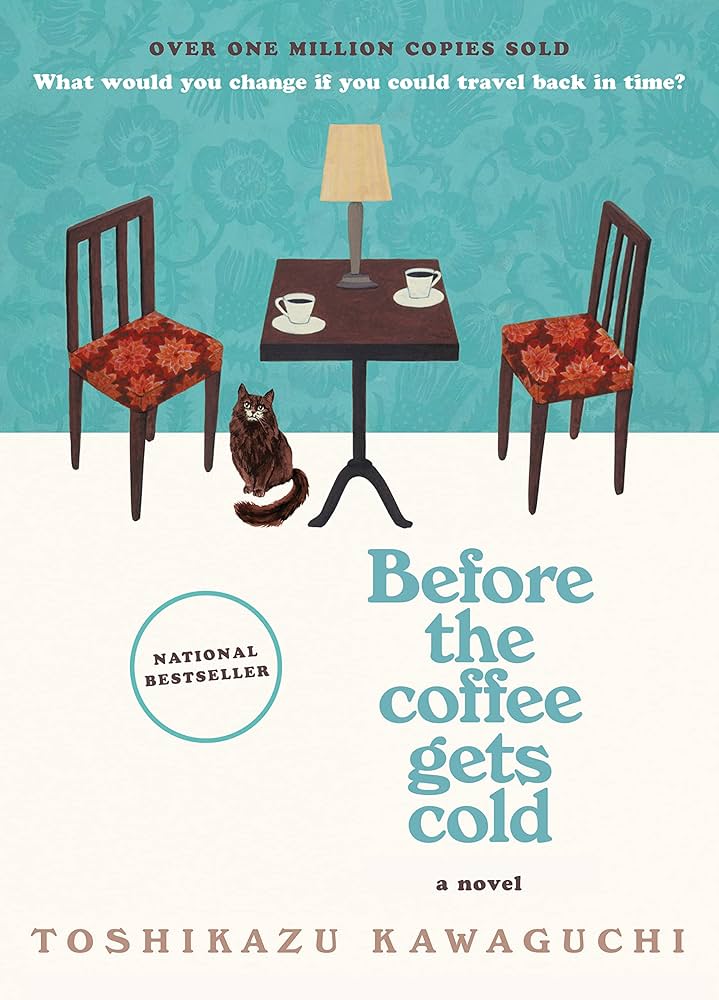
Toshikazu Kawaguchi offers insight to an age-old question in his novel Before the coffee gets cold, which forces readers to contemplate something most people have thought at least once in their life: what would you do if you could go back in time?
The novel, set in a café with the ability to offer people the opportunity to revisit previous times they have been to the establishment, focuses on different perspectives as the characters try to change their fates through the powers of magic and timing. However, what most do not know before entering the café, is that their lives will not change because of their actions in the past. This brings forth an interesting aspect of the café for both those who choose to go back in time and Kawaguchi’s readers: is it worth the pain to go back and not be able to fix anything?
Kawaguchi’s carefulness in approaching the topic is crafted through wisdom and advice, most of which readers will be able to apply to their own lives; his work allows readers the space to take stock of where they are in their lives and what they would do if given the opportunity to have a do-over. The work balances between people who find themselves in situations that are intensely relatable, to a degree that feels almost too personal: breakups and family regret take center stage and readers, if they have the capacity to empathize, will feel the characters’ dilemmas in their souls. Relatability isn’t something that I use too often to critique books, as I believe that it is a very subjective trail, but I couldn’t help myself with this novel because of the way it made me feel. The plot is interesting enough to hook a reader from the very beginning, but if what readers take from this work is the concept of how cool a time-traveling café is, then the point will have been completely missed.
Instead, I implore readers to go into this book with an open mind and heart, because you’ll need it to fully grasp the depth of Kawaguchi’s writing; the precision and depth in which he provides his readers with effectively places them in the situations set out before them and asks: would this be worth it to you? Oftentimes, the answer is yes for both the characters and the reader, because he pulls at heartstrings with the imagery and emotional tone that ultimately takes on a life of its own throughout the work. Readers will be able to fully understand the desperation seen throughout the work, especially given that each of the characters have someone they would do just about anything to see again and the acknowledgement of such a deep emotional situation brings the work to life in the same way as the café, which can be considered a character in itself within the work.
Overall, I would give this work five stars for the writing style, plot and the emotional connection presented. Kawaguchi sets out to make his readers think about their own lives and he accomplishes this through a series of deeply emotional stories set in a world where second chances are not possible, but at the characters’ fingertips if they wish it to be. So, I ask again: if you could go back to a moment in time, would you?
 An Avid Reader's Guide to Books
Leave a comment