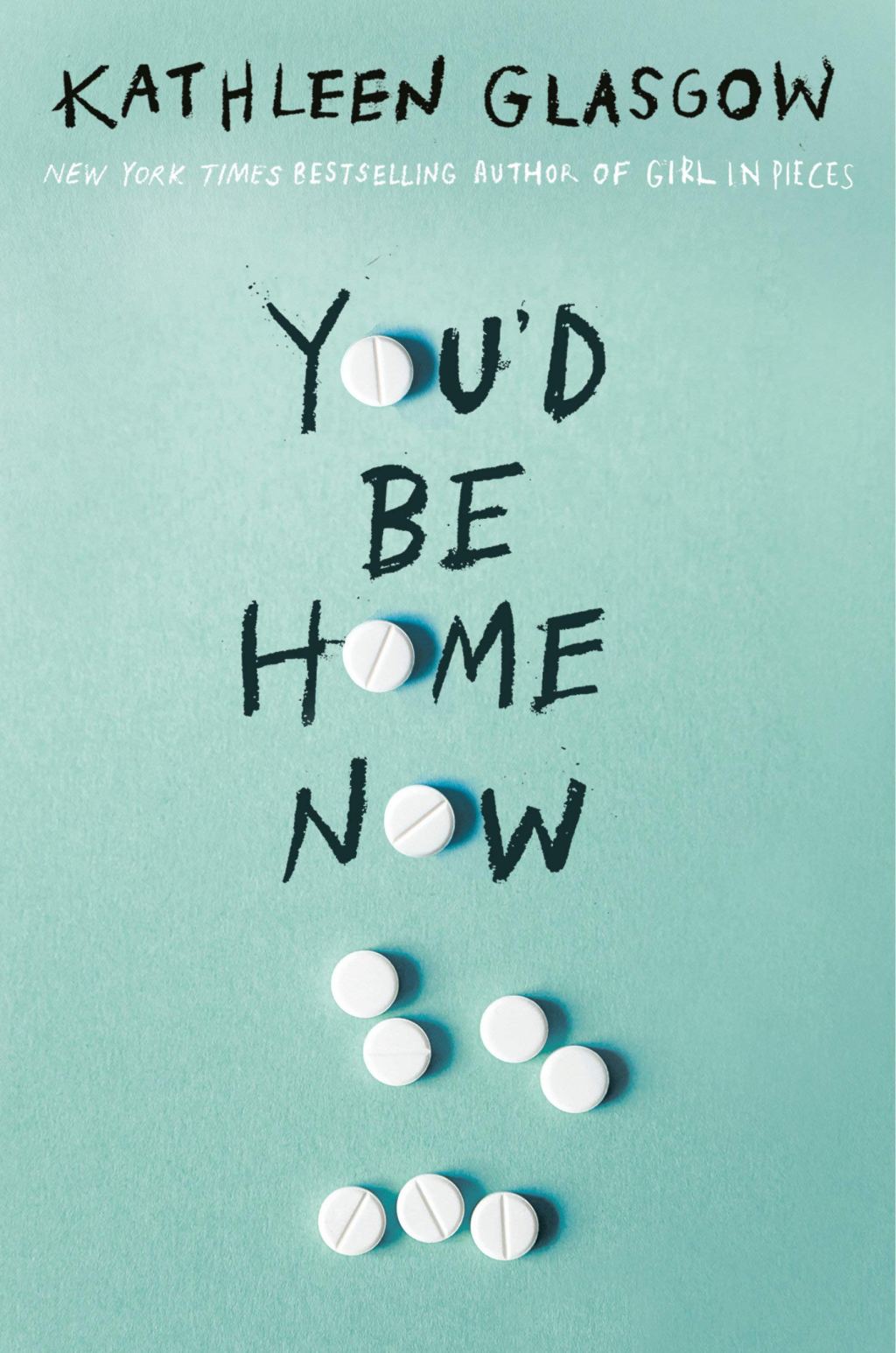
Kathleen Glasgow has shown time and time again that she is unafraid to write about tough topics— a trend that continues in You’d Be Home Now. The story follows Emmy, who is forced to deal with the fallout of her brother’s drug addiction that killed a fellow classmate while doing her best to maintain her public image as more than just her brother’s sister.
Glasgow spends most of the work focusing on the ways that addiction impacts more than just the individual suffering through it— she highlights the ways that family dynamics change and how characters surrounding the situation ultimately find themselves forever changed as a matter of circumstance. The best example of this stems from the main character, Emory, who, despite not doing anything wrong herself, must face the social consequences of her brother’s accident. She quickly learns just how much the events of the last few months has changed her as a person, which begs her to answer the question: who is she, and will she ever be able to fully understand her brother’s struggles?
In addition to the family dynamics, the heaviness of the content of the work lends itself to some self-discovery and the way that Glasgow is able to create and maintain multi-dimensional characters is the mark of a well-written narrative. As the story progresses, Emmy is able to see her brother Joey as more than just his addiction; she learns throughout the events of the work to view him as the brother she once knew, who he is during the present moment, and who he might be able to become all at once. Showcasing the relationship between the two and how addiction impacts their closeness only adds to the dimensional dynamic of their bond; it is very clear early on that the two love each other very deeply, but addiction stands in the way of that throughout most of the work.
Overall, Glasgow is able to paint a picture of what it means to both struggle with addiction and have someone close to you go through it. The work is so important to the discussion and discourse surrounding addiction in today’s society, because it allows space for characters to be seen as more than just their addiction. At the beginning of the work, Emmy truly only sees her brother as an addict, but as the work moves forward, she begins to recognize how much more there is to him than that and she ultimately realizes that his addiction will always be a part of him and she cannot help that if he does not want to get better.
The ability to showcase a hard truth is a testament to the writing style and characterization work of Glasgow. You will find yourself rooting for these characters along the way, but just know that not every story has a happy ending. I rated this work a four out of five stars, and I would recommend it to someone looking to venture into her work for the first time. It is everything it promises to be and ultimately, the characters shine against the backdrop of an unfortunate and tragic situation.
 An Avid Reader's Guide to Books
Leave a comment