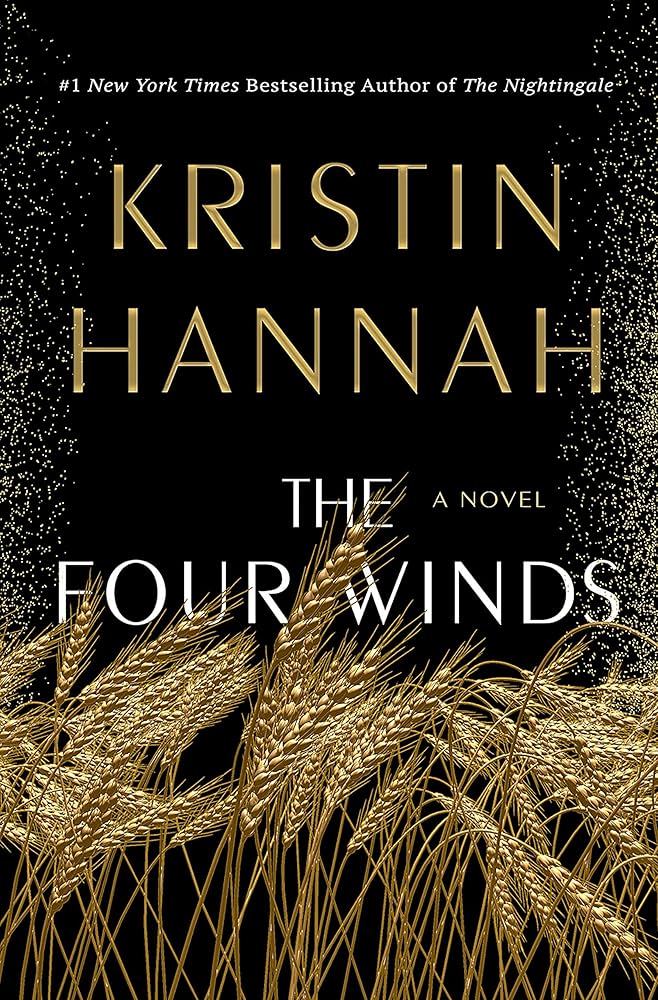
The Four Winds by Kristin Hannah is the kind of novel that settles in slowly, then refuses to let go. Written with a quiet intensity that builds chapter by chapter, it delivers a sweeping portrait of survival during one of the harshest periods in American history—the Dust Bowl and Great Depression.
At its core, this is Elsa Martinelli’s story. Introduced as an overlooked and underestimated woman in 1920s Texas, Elsa’s transformation is both gradual and deeply affecting. What begins as a narrative about societal expectations and family rejection evolves into something far more expansive: a meditation on endurance, sacrifice, and the lengths a mother will go to protect her children. As drought devastates the land and opportunity disappears, Elsa’s journey west to California becomes less about hope and more about survival.
Hannah’s strength lies in her ability to make the setting feel as alive—and as unforgiving—as any character. The dust storms, failing crops, and suffocating heat are not just background elements; they shape every decision, every conflict, and every moment of desperation. The migration to California, often romanticized in other narratives, is portrayed here with stark realism. Instead of promise, Elsa and her family are met with poverty, exploitation, and discrimination, reinforcing the novel’s central theme: the American Dream is not equally accessible to all.
What makes this story resonate is its emotional clarity. Hannah doesn’t shy away from hardship—in fact, she leans into it. There’s a relentless quality to the struggles Elsa faces, which can feel overwhelming at times, but that weight is intentional. It reflects the historical reality of the era, where each small victory is hard-earned and often temporary. The novel becomes less about triumph and more about persistence.
The mother-daughter relationship between Elsa and Loreda is another standout element. It’s layered, often tense, and constantly evolving. Loreda represents both hope and frustration—she dreams of something more, even as her mother fights to preserve what little they have. Their dynamic adds emotional depth and provides a lens through which the reader can see generational differences in how hardship is understood and endured.
Stylistically, the writing is accessible yet evocative. Hannah balances descriptive passages with forward momentum, ensuring the story never feels stagnant despite its length. However, some readers may find the pacing uneven, particularly in the latter half, where the emotional intensity escalates. The ending, while undeniably powerful, has drawn mixed reactions for its heavy emotional pull and sense of inevitability.
Still, it’s difficult to deny the impact of The Four Winds. It’s a novel that asks readers to sit with discomfort, to understand resilience not as a triumphant victory but as a continuous, often exhausting effort. The historical detail adds weight to the narrative, grounding Elsa’s story in real struggles faced by countless families during the 1930s.
In the end, this is a story about survival in its purest form. Not glamorous, not heroic in the traditional sense, but deeply human. It’s about holding on when there’s every reason to let go—and finding meaning in that fight.
For readers who appreciate character-driven historical fiction with emotional depth, The Four Winds delivers a reading experience that is both heartbreaking and unforgettable.
 An Avid Reader's Guide to Books
Leave a comment