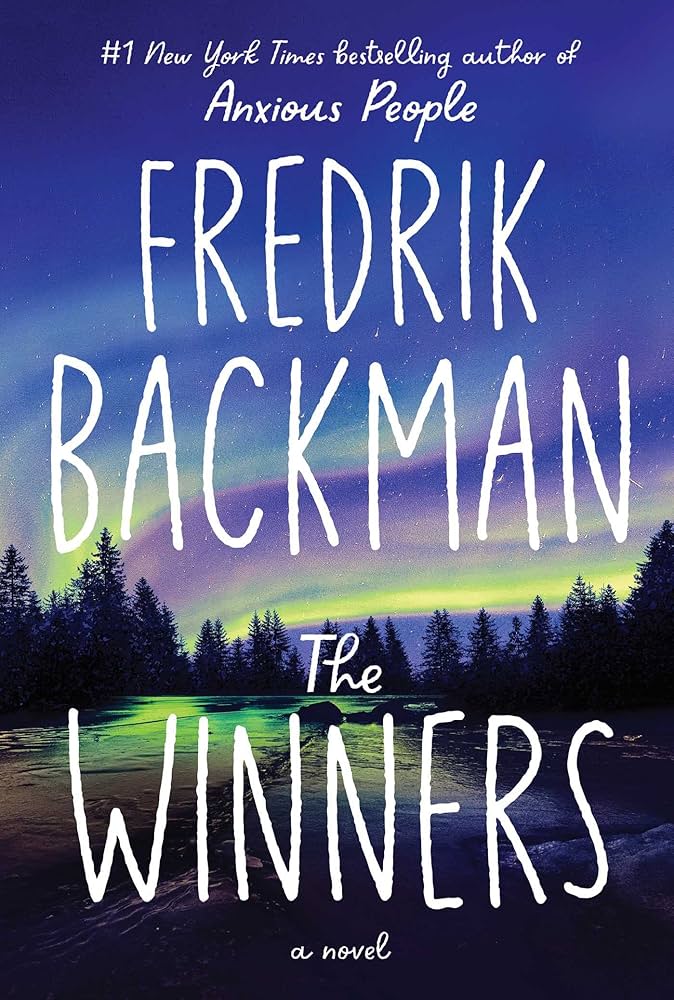
In The Winners, Fredrik Backman delivers a powerful and emotionally layered conclusion to the Beartown trilogy, crafting a story that is as much about a town’s identity as it is about the individuals who inhabit it. With his signature blend of quiet insight and emotional precision, Backman explores what happens when a community is pushed to its limits—when loyalty, grief, and hope collide in ways that leave lasting marks.
Set once again in the small, hockey-obsessed town of Beartown, the novel opens with a sense of unease. There is a storm coming—both literal and metaphorical—and Backman wastes little time establishing that this story will carry significant weight. While hockey remains a central thread, it is no longer the sole focus. Instead, it serves as a backdrop to a broader exploration of how people respond to crisis, how they protect what they love, and how easily divisions can form when fear takes hold.
One of the novel’s greatest strengths is its ability to balance a large and interconnected cast of characters without losing emotional clarity. Familiar faces return, including Maya, Benji, and Peter, each carrying the emotional scars of previous events. Backman treats these characters with care, allowing them to grow in ways that feel organic rather than forced. Their struggles—whether internal or external—are portrayed with honesty, making their decisions and consequences resonate deeply.
Maya, in particular, continues to stand out as one of the trilogy’s most compelling voices. Her journey reflects both resilience and vulnerability, and her perspective adds emotional weight to the story’s most pivotal moments. Benji’s arc, meanwhile, is handled with remarkable sensitivity, offering a nuanced portrayal of identity, loyalty, and the search for belonging. Backman avoids easy resolutions, instead presenting characters who feel authentically human in their contradictions.
What sets The Winners apart is its focus on the collective experience of a community under strain. Backman captures the subtle ways in which tension spreads—through whispered conversations, shifting allegiances, and unspoken fears. The town itself becomes a character, shaped by its history and the people who define it. The divide between Beartown and its neighboring community remains a driving force, highlighting how quickly “us versus them” mentalities can escalate.
The writing style remains consistent with Backman’s previous work—introspective, often poignant, and occasionally laced with understated humor. His ability to distill complex emotions into simple, impactful observations is on full display. There are moments where the narrative pauses to reflect on life, love, and loss, and while these passages may feel deliberate, they ultimately enhance the story’s emotional depth rather than detract from its pacing.
As the plot unfolds, the tension steadily builds toward a series of events that are both shocking and inevitable. Backman carefully lays the groundwork, ensuring that each turning point feels earned. The stakes are high, not because of grand spectacle, but because of the emotional investment readers have in the characters. When tragedy strikes, it does so with a weight that lingers, forcing both the characters and the reader to confront difficult truths.
Despite its heavier themes, the novel never loses sight of hope. Backman does not present optimism as an easy or guaranteed outcome, but rather as something that must be chosen—again and again—even in the face of uncertainty. This balance between heartbreak and resilience is what gives The Winners its lasting impact.
The conclusion is both satisfying and reflective, tying together the trilogy’s central themes while allowing space for interpretation. Backman resists the urge to neatly resolve every storyline, instead offering a sense of continuation that feels true to life. In doing so, he reinforces the idea that communities, like the people within them, are always evolving.Ultimately, The Winners is a deeply affecting novel that goes beyond its setting to explore universal questions about identity, belonging, and the cost of standing up for what matters. It is a fitting and memorable end to a trilogy that has consistently prioritized emotional honesty, leaving readers with a story that lingers well beyond its final pages.
 An Avid Reader's Guide to Books
Leave a comment